Before 10 AM, Nobody Owns Your Calendar: Inside the Meeting-Free Morning Experiment

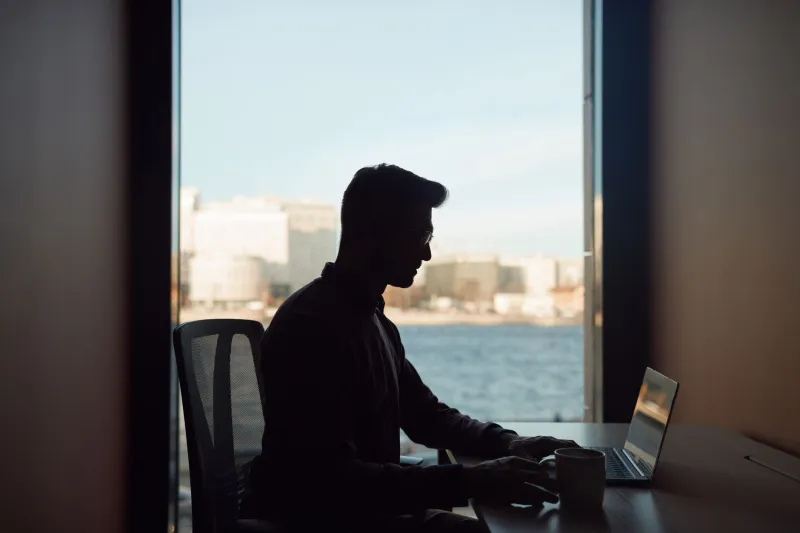
Photo: quiet modern office desk morning sunlight laptop empty workspace, via images.stockcake.com
There's a moment that happens in most open-plan offices around 9:15 AM. Someone closes their laptop, picks up a coffee, and sighs: I have back-to-backs until noon. The actual work — the report, the code, the client proposal — waits for a version of you that shows up at 2 PM, already half-drained.
A small but growing number of American companies decided that math doesn't work. Their fix is almost embarrassingly simple: no meetings before 10 or 11 AM. No standups, no syncs, no "quick chats." Just protected, uninterrupted time.
What started as a scheduling tweak has turned into something bigger — a quiet referendum on how we actually do our jobs.
Where the Idea Came From
The meeting-free morning isn't brand new. Asana, Facebook (now Meta), and a handful of design firms experimented with versions of it years ago, often under names like "Maker Time" or "No-Meeting Wednesdays." What's changed is the adoption curve. Post-pandemic, the average knowledge worker's meeting load ballooned — one Microsoft study of workplace telemetry found meeting counts for Teams users jumped more than 250% between early 2020 and 2021.
Some of that was genuine collaboration. A lot of it was calendar sprawl: recurring invites nobody remembered booking, status meetings that replaced a two-line Slack message, and the creeping belief that being visibly available is the job.
The companies protecting their mornings made a different bet: if you give people a guaranteed block of concentration, they'll stop doing their real work at 9 PM on a Tuesday.
What Actually Happens
Talk to teams that have stuck with the policy for six months or more, and three patterns show up again and again.
The work gets better, and it gets done earlier. A marketing director at a Denver-based SaaS company told me her team moved all internal syncs to the afternoon. Within a month, she noticed the analytics reports that used to land "sometime Thursday" were arriving by Wednesday lunch. Nobody worked more hours. They just stopped fragmenting the hours they had.
Anxiety drops — counterintuitively. You'd think a morning meeting ban would make people nervous about being out of the loop. The opposite tends to happen. When you know nothing will interrupt you until 10, you stop doom-scrolling your calendar at breakfast. The day has a shape. Psychologists call this "temporal autonomy," and it's one of the strongest predictors of job satisfaction in workplace research.
Retention gets a quiet boost. Exit interviews rarely say "I left because of my calendar." But burnout researchers have long pointed to lack of control over one's time as a core driver of attrition. A protected morning is a cheap, visible signal that the company trusts you to manage your own brain. In a tight labor market, signals matter.
None of this is magic. It's just arithmetic. Three uninterrupted hours is when the hard, valuable work actually happens — the stuff that moves careers and closes quarters.
The Objections (and Why They Mostly Fall Apart)
Every proposal like this meets the same pushback, so let's handle it now.
"We're global. My East Coast team overlaps with Europe in the morning." Fine — then your protected block is 8 to 11 AM your time only if your stakeholders allow it. The principle isn't a specific hour; it's that each person gets some guaranteed deep-work window. If yours has to be afternoon, so be it. But make it sacred.
"What if there's an emergency?" Emergencies don't respect calendars. The policy isn't a lockbox — it's a default. Real fires get handled. The 14th weekly status update does not.
"Managers need visibility." Managers need outcomes. If you can't tell what your team did with three uninterrupted hours, you have a visibility problem that no meeting will solve.
The Playbook: How to Pitch It Without Executive Buy-In
Here's the good news: you don't need the CEO to sign a manifesto. Some of the most successful meeting-free mornings started with one team and one manager. Here's how to make the case.
1. Start with data from your own calendar. Export your last month of meetings and tally the mornings. Count how many could've been an email (be honest). Even a rough audit — "I had 31 morning meetings last month; 19 were informational" — is a compelling opener.
2. Propose a trial, not a policy. "Can we try no-meeting mornings for the next four weeks and see what happens?" is low-risk and easy to say yes to. Policies invite debate. Experiments invite curiosity. Suggest a 30-day sprint with a built-in review.
3. Name the trade-off before they do. Acknowledge that some collaboration will shift to the afternoon or async channels. Offer the fix upfront: a daily written check-in thread, or a 20-minute afternoon huddle that replaces three morning ones.
4. Make your manager the hero. Frame it as helping them get their deep work back too. Managers are often the most meeting-destroyed people in the building. A pitch that gives them back their mornings is a pitch that gets approved.
5. Measure something visible. Pick one deliverable — a report, a sprint item, a client response time — and track whether it improves during the trial. When the four weeks are up, you're not arguing with vibes. You're presenting results.
6. If your own team says no, claim your mornings anyway. Block 8–10 AM on your calendar as "focus time." Decline meetings that fall inside it when you can, offering afternoon slots instead. Do it consistently and politely, and most colleagues will adapt to your rhythm without ever realizing you ran a one-person experiment.
A Different Kind of Perk
Companies love to advertise their perks: the cold brew on tap, the wellness stipend, the gym discount. But the perk ambitious professionals actually crave in 2025 isn't a thing — it's time that belongs to them.
A meeting-free morning won't fix a bad job. But in a decent one, it can be the difference between ending the day feeling like you built something and feeling like you attended a lot. And unlike the espresso machine, it costs nothing but a little calendar courage.
Start with yours.