Build a Credential Ladder, Not a Badge Collection: The Architecture Behind Certifications That Compound

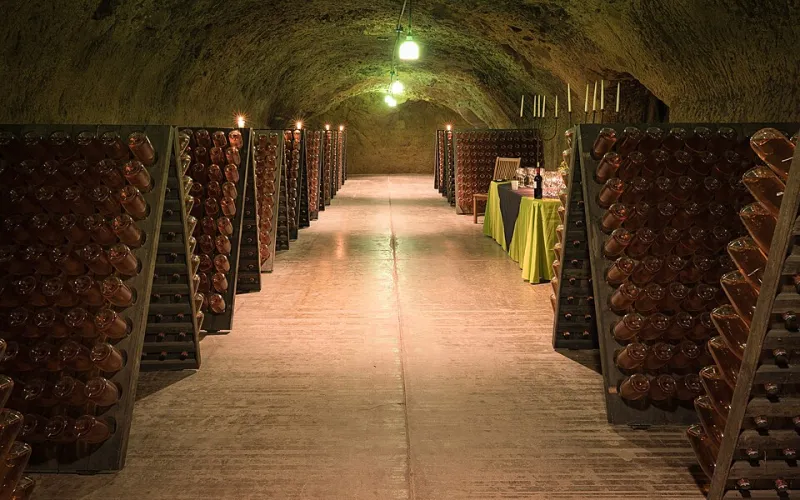
Photo: PumpkinSky, CC BY-SA 4.0, via Wikimedia Commons
Somewhere in your LinkedIn feed right now, someone is announcing their fourth certification of the year. A certificate here, a badge there, a digital credential with a verification link and zero job offers attached.
It's not that certifications don't work. It's that most people collect them randomly — chasing whatever course their algorithm served up that week. The result is a wall of badges that, taken together, say nothing coherent to a hiring manager.
The professionals who actually move up do something different. They build a credential ladder: a deliberate sequence where each certification makes the next one more valuable. Credential one gets you the interview. Credential two changes what you're qualified to do. Credential three changes who takes your calls.
Here's how to build one.
Start With the Map, Not the Course
Before you enroll in anything, audit your industry's credential landscape. Most fields have a rough hierarchy, and it usually follows one of three patterns:
- The foundation model (common in IT and cloud): an entry credential like CompTIA Security+ or AWS Cloud Practitioner unlocks the mid-tier cert, which unlocks the specialist ones. Skipping the foundation often means paying for the same material twice.
- The gatekeeper model (common in accounting and project management): the CPA, the PMP, the SHRM-CP. These aren't really skills signals — they're keys. Without them, certain doors don't open regardless of your experience.
- The portfolio model (common in marketing and design): credentials matter less individually and more as a set. Three adjacent certs — say, Google Analytics, HubSpot, and a paid media platform — read as "this person can run a modern funnel," while one of each from unrelated fields reads as "this person gets bored."
Spend an evening on job boards. Pull 20 postings for the role you want in five years, not the one you have now. Note which certifications appear repeatedly. That's your map. Everything else is noise.
Do the Actual Math
Credential stacking is one of the few career moves where you can run real numbers before committing. Take a hypothetical ladder in cloud security:
- Security+: roughly $400 exam fee, 80 hours of study
- AWS Security Specialty: $300, another 100 hours if you have the foundation
- CISSP: $749, but it requires five years of experience — so it's a year-three credential, not a year-one one
Total cash outlay: around $1,500 plus study materials. Now compare that against the market. Cloud security roles in the US routinely carry a $15,000–$25,000 premium over generalist IT roles, and multiple salary surveys show certified candidates clearing screening filters that uncertified ones never see.
That's a ladder. The Security+ alone wouldn't get you there. The CISSP alone would be unreachable without the runway the first two built. Each credential compounds the return on the last.
Contrast that with the classic anti-pattern: a $2,000 course in a trendy tool that your target industry barely uses. Expensive, impressive-sounding, structurally useless.
A simple rule: never take a certification that doesn't visibly appear in job postings you'd actually accept.
What Hiring Managers Actually Read
Talk to hiring managers and a consistent picture emerges. They don't count badges — they read combinations.
A recruiter for a mid-market accounting firm put it plainly: a candidate with a CPA and nothing else is a solid accountant. A candidate with a CPA plus a CISA (the audit-focused IT credential) is someone who can lead the firm's growing technology-assurance practice. That second credential might add six figures of career trajectory, because the pair signals something neither cert does alone: mastery at the intersection.
The same logic runs through every field. Project management plus a technical foundation cert reads as "can lead engineering teams." HR certification plus a data analytics credential reads as "people ops that will survive a board meeting."
Hiring managers described three combinations that consistently signal mastery:
- Deep + wide: a specialist credential layered on a generalist one, proving you chose depth rather than drifted into it.
- Core + translator: the gatekeeper cert in your field plus one from the department next door. Translators get promoted.
- Foundation + flagship: the entry cert plus the field's hardest credential, completed in order. It shows discipline, not just enthusiasm.
What they consistently discount: anything expired, anything from a vendor with no market presence, and anything stacked in the same month. Five certificates earned in a quarter reads as a sprint, not a practice.
Sequence Beats Speed
The biggest mistake in credential stacking isn't choosing the wrong cert — it's taking the right certs in the wrong order.
Ladders have a logic. Experience-gated credentials like the CISSP or PMP should anchor the end of your plan, not the start. Foundation certs come first not because they're impressive but because they make the expensive ones cheaper, faster, and less risky. And adjacent-field credentials work best when you already have credibility in your home discipline — otherwise you look unfocused instead of versatile.
Draft your ladder as a three-year sequence. Write down, for each rung: what it costs, what it unlocks, and what evidence you'll have that it worked (a role change, a raise, a new title on your email signature). If a rung has no answer to "what does this unlock," it's a badge, not a step.
Credentials as Architecture
The shift here is conceptual. A badge collection says "I like learning." A credential ladder says "I built this on purpose" — to hiring managers, to your current employer, and to yourself.
Certifications won't replace experience, and no ladder substitutes for doing good work. But in a labor market where screening software and skeptical managers filter candidates in seconds, the right stack is the difference between a career that accumulates and one that compounds.
Audit the map. Run the math. Sequence the climb.
Then build something that holds weight.